Eligibility & Verification
What Eligibility Verification Errors Cost You at the Chair
By Dr. Ammal Machnouk, Product and Success Lead · October 27, 2026
For dentists and practice administrators: why eligibility verification errors show up in your treatment plans and your patients' trust long before they show up on a billing report.
Every treatment plan you present rests on an assumption: that the coverage information in front of you is accurate. Most of the time, nobody questions it. The patient's insurance is on file, the front desk ran a check, and the visit moves forward.
Then, weeks later, a claim comes back denied for inactive or terminated coverage. That's when eligibility verification errors finally get tested, and by then you've already delivered the treatment.
Eligibility verification errors are a clinical problem, not a billing one
You presented a case. The patient accepted it based on what they understood their coverage to be. Now you're the one explaining why the estimate they were given no longer holds.
Anyone who has had that conversation chairside knows it costs more than the claim. It costs trust. The patient doesn't remember that a payer changed something. They remember that the number you gave them was wrong.
A checked plan still isn't a reliable one
At most practices, someone still checks eligibility by hand: logging into payer portals or calling insurers, usually on the day of the appointment or the day before. It's repetitive and slow, and it's the first task to slip when the front desk is short-staffed or the schedule is full.
The result is coverage information that's technically checked but not reliable:
- A plan that lapsed last week doesn't get flagged.
- A frequency limitation that would have blocked the claim goes unnoticed.
- A deductible that was already met, or wasn't, gets assumed instead of confirmed.
None of these are dramatic failures. They're small gaps that only become visible once a payer denies the claim and your team has to work out why. We walked through more of the plan details hiding behind an "active" status in Active Isn't the Same as Covered.
Whiter Family Dentistry ran into exactly this pattern. On paper, their practice management system's bundled tools were verifying eligibility. In practice, the data was surface-level, and staff still spent hours on the phone with payers confirming what the system should have told them. Claims went out dirty, and the denials and rework that followed all traced back to checks that looked complete but weren't. Their full story is in Ten Seconds to Know If Today's Appointment Will Get Paid.
What an eligibility error actually costs your practice
The denied claim is only the visible part. Behind it sit:
- Staff time spent re-verifying coverage after the fact
- The rework of correcting and resubmitting the claim
- The conversation where you tell a patient their estimate changed after treatment
Multiply that across a full schedule and eligibility gaps become one of the quieter, more persistent drains on practice revenue.
Alpha Dental, a growing DSO with 19 practices, saw it at scale. Staff checked eligibility by hand, one patient at a time, on the day of service. That tied the team up in repetitive work and created delays whenever they were short-handed. Claims came back denied for inactive or terminated coverage nobody had caught in time. Same gap as Whiter Family Dentistry, multiplied across more locations and more patients a day.
What changes when coverage is checked before the patient sits down
The fix isn't more manual checking. It's removing the manual step. Automated eligibility checks run continuously before every appointment and catch terminated coverage and policy mismatches before they reach the chair. Instead of one check on the day of the visit, coverage stays current, so you and your patient work from information that's actually true.
When Alpha Dental moved to automated eligibility with Dental-X, the results showed up fast:
- $2.4M in revenue actualised across 19 practices in 90 days
- 30% margin growth and the best financial year on record
- 60% savings on billing operating costs after centralising billing operations
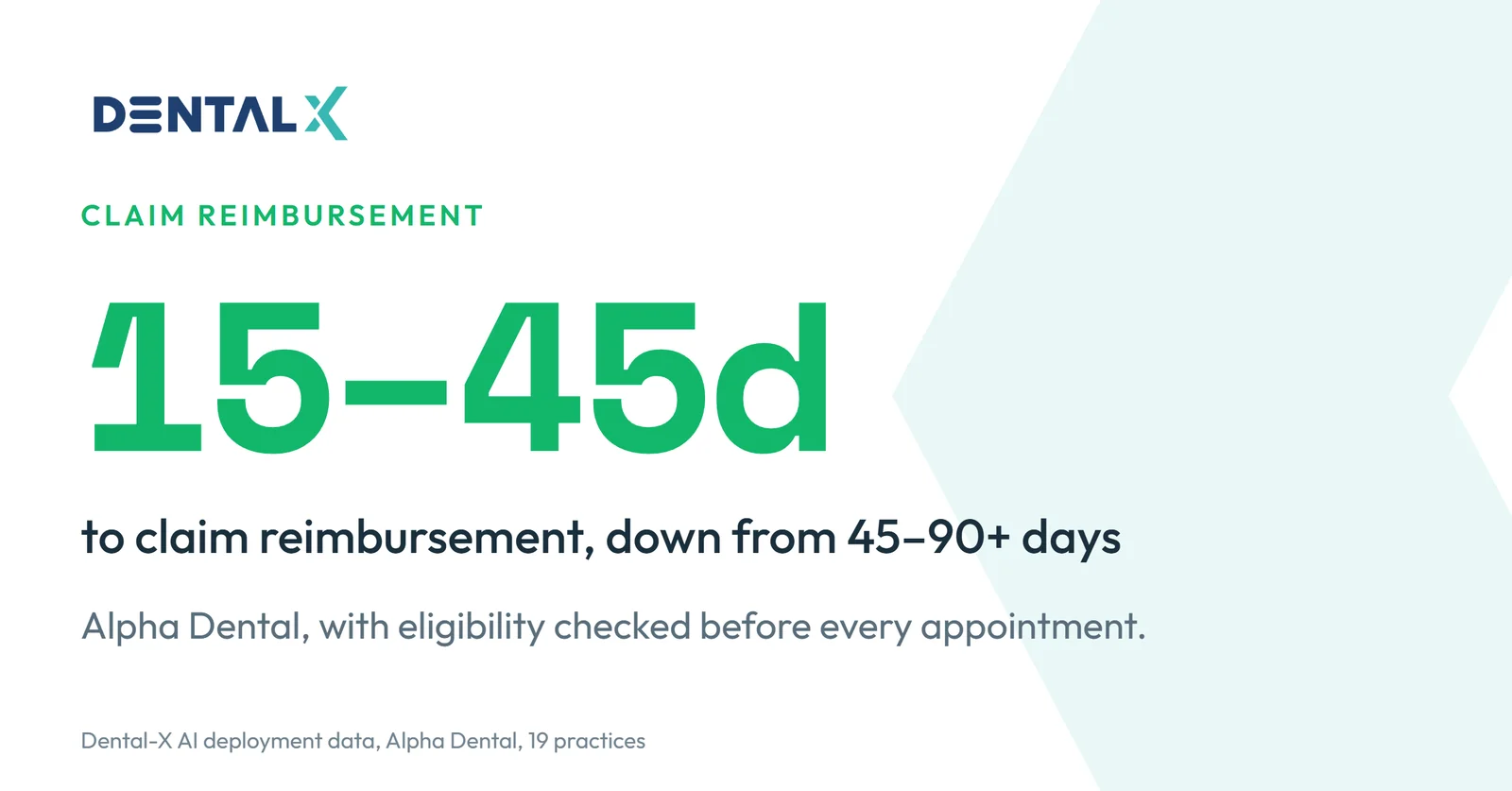
- Claims reimbursed in 15–45 days, down from 45–90+ days
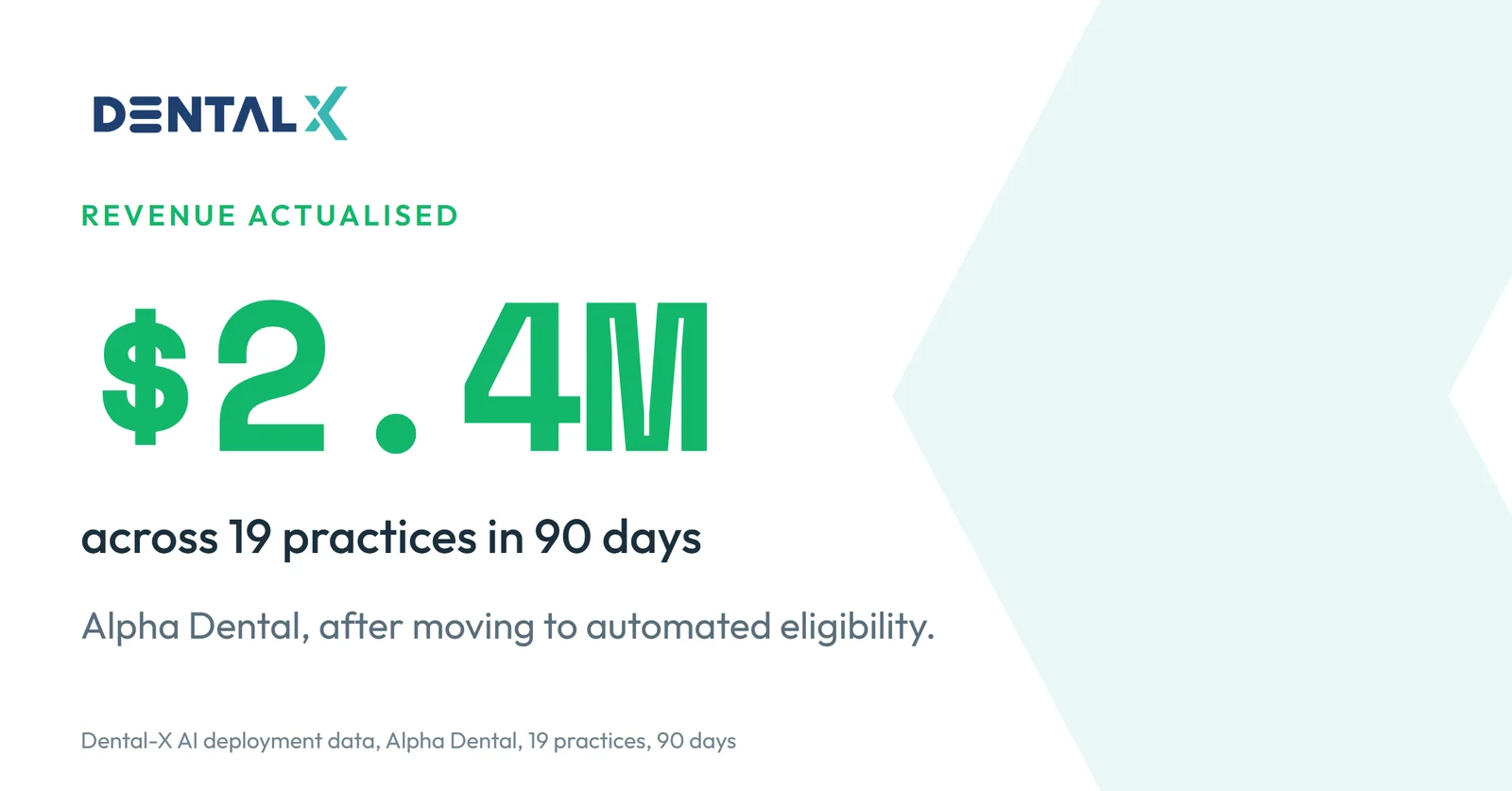
"Alpha Dental realized $2.4M revenue across 19 practices in just 90 days due to automated RCM with Dental-X. Automated eligibility, coupled with fast claims and payment posting, helped us get revenue on our books faster. Now that's real value."
— Penny Filipino, COO, Alpha Dental
Whiter Family Dentistry saw a similar shift after moving off bundled practice management tools and onto real-time eligibility. Within six months, the practice grew EBITDA by 15%, and Dental-X took on the work of 1.5 full-time staff members. That time went back to patient care instead of payer phone calls.
Five questions to ask before your next case presentation
You don't need new software to start closing the gap. Ask your team:
- When was this patient's coverage last checked? Not whether it was checked. A check from last month doesn't cover a plan that lapsed last week.
- Was it checked for the procedures I'm presenting? An active plan can still exclude, limit or downgrade the specific work on the treatment plan.
- What's left on the deductible and the annual maximum? Confirmed today, not assumed from the last visit.
- Will coverage be re-checked before each visit of a multi-visit case? Plans can change between the first appointment and the last.
- How many denials last month were for inactive or terminated coverage? That number is your eligibility error rate, and it should be close to zero.
Questions practice owners ask about eligibility verification errors
What are eligibility verification errors in a dental practice?
Coverage information that was checked but turns out to be wrong or incomplete when the treatment happens: a plan that lapsed, a frequency limitation nobody caught, or a deductible that was assumed instead of confirmed.
How do eligibility verification errors affect patients?
The patient accepts a treatment plan based on an estimate, then learns after treatment that their coverage didn't apply and the estimate no longer holds. It costs the practice the claim and costs the patient's trust.
How can a practice prevent denials for inactive or terminated coverage?
Check coverage automatically before every appointment, at the level of the procedures being presented, instead of once by hand on the day of the visit. Re-check before each visit of a multi-visit case.
Is the coverage behind your next treatment plan actually current?
Eligibility verification is easy to treat as a front-desk task. As dentists, we know its consequences land on the clinical side: in treatment plans that unravel, estimates that turn out wrong, and conversations we end up having with patients after the fact. Fixing it isn't about adding more manual review. It's about making sure the coverage behind every treatment plan is accurate before the patient sits down.

Dental-X AI is the Revenue Recovery platform that finds and recaptures the money leaking out of your insurance workflow, and proves it in recovered dollars.
Find out what your practice is leaving with the payers.
A Leakage Audit shows you where the revenue is going, before you commit to anything.